
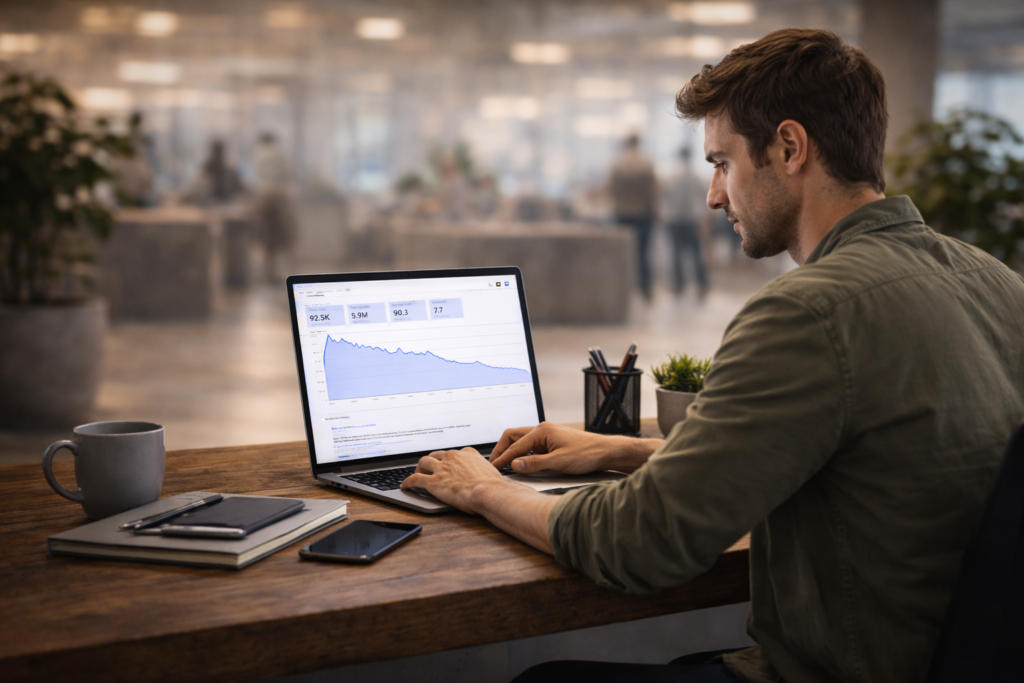
Ranking #1 but no traffic was once considered impossible, because SEO followed a simple rule: reach the top of Google and traffic would follow. Today, that rule no longer holds true. Presently, a lot of companies rank #1, yet their analytics show few visitors.
This isn’t a technical failure. It’s a shift in how Google works and how people search. With search results now packed with AI answers, ads, and instant information, even the top spot can struggle to earn attention. That’s why many websites are seeing high rankings but low clicks, despite doing everything “by the book”.
Google Has Shifted From Search Engine to Answer Engine
Earlier, Google acted as a gateway, pointing users to websites where they could find information. Now, Google often keeps users on its own page by displaying answers directly—changing how businesses evaluate the best SEO company in Kerala.
Definitions, step-by-step explanations, comparisons, and summaries appear before organic results. When users get what they need instantly, they don’t feel the need to click. This is one of the biggest reasons behind ranking #1 but no traffic.
Visibility Does Not Equal Attention Anymore
Ranking at the top doesn’t always mean being seen. Search pages today are crowded with:
- Paid ads
- AI-generated summaries
- Maps and local business listings
- Video and image results
Organic links are often pushed further down the page. Even when your website is technically #1, it may not be the first thing users notice. This gap between position and visibility leads to high rankings but low clicks.
Many Searches Are Designed to End on Google
A large number of searches today are not meant to lead to websites at all. People ask quick questions, look for short explanations, or want instant clarity.
When Google can resolve the query on its own page, users leave satisfied. Your content may still be ranking, but it’s serving Google more than it serves your website traffic.
Why Click-Through Rate Matters More Than Ranking
SEO success is no longer measured only by position. Click-through rate has become just as important.
If your title and description don’t clearly show value, users scroll past. Generic headlines, vague descriptions, or overused phrases reduce curiosity, which again results in high rankings but low clicks.
How Websites Can Earn Clicks in Today’s Search Results
To attract traffic now, content needs to go beyond answering basic questions. Strong pages usually:
- Offer opinions, insights, or real-world context
- Address specific problems faced by businesses or users
- Use clear, benefit-driven headlines
- Include local relevance where applicable
This gives users a reason to click, even when Google provides partial answers.
Brand Recognition Is Now a Ranking Advantage
When multiple results look similar, people choose what feels familiar. Trusted brands often get clicks even from lower positions.
This means businesses need to build authority through consistent content, tone, and expertise, not just rely on ranking alone.
In Simple Terms…
Ranking #1 on Google still has value, but it no longer guarantees website visits. With changing search behaviour and Google’s evolving layout, many businesses face ranking #1 but no traffic or high rankings but low clicks. SEO today is not about being present; it is about being chosen, something I recently broke down in this practical SEO discussion, and websites that offer depth, clarity, and genuine value will continue to attract traffic even as search engines continue to change.
FAQ
1. Why do websites experience ranking #1 but no traffic?
Ranking #1, but no traffic happens because Google now answers many queries directly on the search results page. Featured snippets, AI summaries, ads, maps, and videos often satisfy the user before they click any organic result, even the top one.
2. What causes high rankings but low clicks in Google search?
High rankings but low clicks are usually caused by reduced visibility. Organic results are pushed down by paid ads, AI-generated answers, local packs, and rich media, meaning users may not even see the #1 organic result without scrolling.
3. Is ranking #1 on Google still valuable if there are no clicks?
Yes, but differently than before. Ranking #1 still builds credibility and brand visibility, but it no longer guarantees traffic. In many cases, the page supports Google’s answers instead of receiving the click, leading to ranking #1 but no traffic.
4. How does Google’s AI impact high rankings but low clicks?
Google’s AI summarizes content directly in search results, reducing the need for users to visit websites. Even when your page ranks highly, users may get enough information from the AI overview, resulting in high rankings but low clicks.
5. Can a lower-ranked page get more traffic than a #1 ranked page?
Yes. A lower-ranked page can attract more clicks if it has a stronger headline, clearer value proposition, or better alignment with user intent. This is why many sites see ranking #1 but no traffic while competitors below them gain clicks.
6. How can websites reduce the problem of ranking #1 but no traffic?
To overcome ranking #1 but no traffic, pages must go beyond basic answers. Content should offer unique insights, strong positioning, clear benefits, and reasons to click—something users cannot get directly from Google’s search results.