
There’s a moment every growing brand reaches.
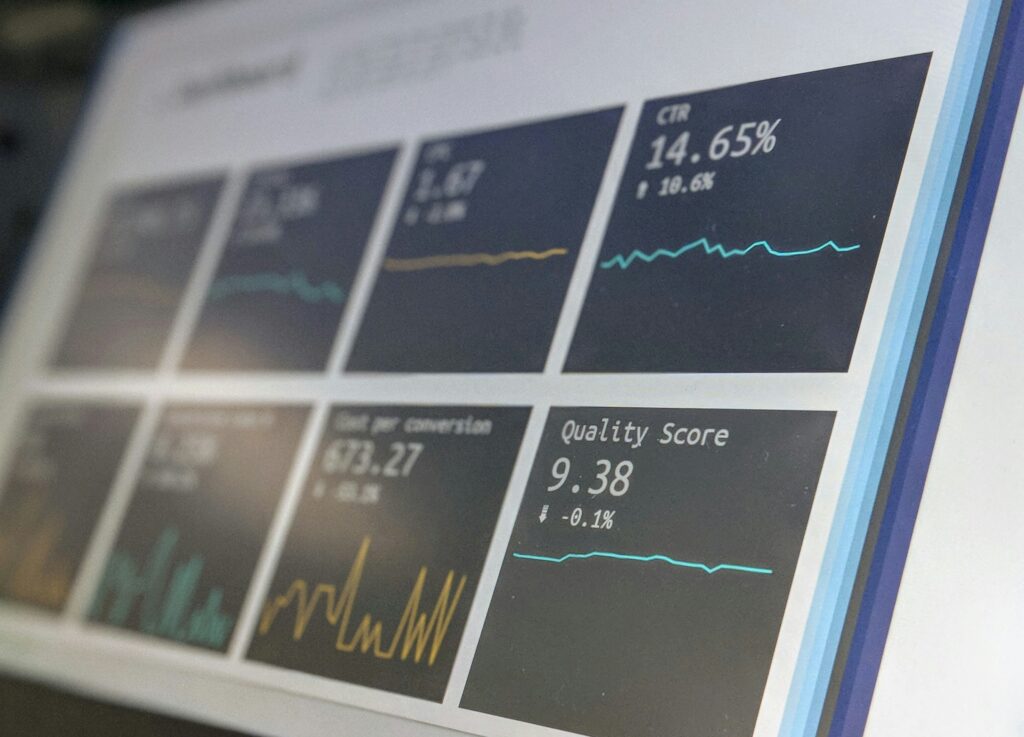
Your performance marketing campaigns are working. Revenue is steady. Cost per acquisition is under control. The dashboards look promising.
Then comes the instinct.
Let’s increase the budget.
And that is where things often begin to slip.
At Quadcubes, we have seen brands move from profitable growth to pressured margins within weeks, simply because scaling was treated as a volume decision instead of a strategic one. Revenue went up. Efficiency went down. And the first metric to suffer was ROAS.
ROAS stands for Return on Ad Spend. It measures how much revenue you generate for every unit spent on advertising. If you spend 1 lakh and generate 4 lakhs, your ROAS is 4x. It is not just a performance indicator. It is a profitability signal.
Scaling without protecting ROAS is like driving faster without checking fuel consumption. You might reach somewhere quickly, but at a higher cost than expected.
The real question is not how to spend more.
It is how to grow smarter.
Scaling Is About Stability, Not Speed
One of the biggest misconceptions around performance marketing campaigns is that higher spend automatically means proportional growth.
In reality, performance-based campaigns operate within systems. Algorithms learn from patterns. Audiences respond to relevance. Creatives drive engagement.
When budgets increase aggressively, the balance shifts. Algorithms re-enter learning phases. Costs fluctuate. Audience fatigue sets in. Efficiency drops.
The brands that scale profitably understand that performance has a rhythm. Growth should feel controlled, not chaotic. Budget increases are gradual. Adjustments are based on data patterns, not excitement.
The best performance marketing campaigns are rarely scaled overnight. They are expanded with patience.
What Makes a Campaign Scalable
Not every campaign deserves to be scaled.
Some perform well because they hit a narrow, high-intent audience. Others succeed because creative messaging resonates deeply within a specific segment. Expanding too quickly can dilute that advantage.
Before scaling, it is critical to understand why the campaign works.
- Is it the audience quality?
- Is it the creative angle?
- Is it the offer?
- Is it the landing page experience?
At Quadcubes, we treat performance marketing campaigns as ecosystems. Audience targeting, creative strategy, funnel structure, and pricing all work together. When one element is weak, scaling exposes it.
Profitability at scale comes from reinforcing strengths and strengthening weak links before expansion.
Creative Fatigue Is Real
One of the most silent ROAS killers is creative fatigue.
When the same ad is shown repeatedly to the same audience, engagement declines. Click-through rates fall. Cost per click increases. Conversion efficiency weakens.
Yet many brands attempt to scale without refreshing creative assets.
Scaling performance-based campaigns requires constant creative evolution. New storytelling angles, new hooks, new visuals. Messaging must stay relevant and emotionally compelling.
Performance marketing is not purely analytical. It is deeply psychological.
If your audience stops paying attention, no targeting refinement can fix it.
The Funnel Is Part of Performance
There is another layer that brands often overlook.
As traffic increases, funnel weaknesses become more visible.
A landing page that converts adequately at smaller volumes may struggle at scale. Checkout friction that seemed minor suddenly impacts revenue significantly. Offers that worked in a niche audience may not resonate broadly.
Protecting ROAS while scaling requires looking beyond ads.
It requires examining:
- Page speed and user experience
- Clarity of value proposition
- Trust signals
- Upsell opportunities
- Retargeting sequences
Performance marketing campaigns are not isolated media efforts. They are revenue systems.
Audience Expansion Must Be Intentional
Scaling often means reaching new audiences. But expansion without insight can dilute efficiency.
A core audience that converts at high ROAS may not behave the same as a broader segment. Acquisition costs rise as you move away from high-intent groups.
Profitable growth comes from strategic expansion. Lookalike audiences based on high-value customers. Testing adjacent interest clusters. Geographic diversification aligned with business capacity.
The objective is not maximum reach.
It is profitable.
Revenue Is Not the Same as Profit
Brands sometimes celebrate top-line revenue growth without analysing the impact on margins.
If increased ad spend drives sales but reduces net profit, scaling becomes counterproductive.
The healthiest performance marketing campaigns align marketing metrics with business metrics.
Customer lifetime value, repeat purchase behaviour, and contribution margins matter. A campaign that attracts customers with high retention potential can justify scaling even if initial ROAS appears moderate.
Conversely, campaigns that generate quick sales but low retention can damage long-term profitability.
Scaling should serve business sustainability, not ego metrics.
Our Approach to Scaling
At Quadcubes, we view scaling as a layered process, not a reaction.
We study performance trends before increasing budgets. We analyse audience behaviour deeply. We rotate creatives proactively. We refine funnel experiences continuously.
Most importantly, we align marketing growth with operational readiness. There is no value in generating demand that the business cannot fulfil efficiently.
Performance marketing campaigns must evolve as they grow. Strategy, creative, targeting, and funnel optimisation move together.
This integrated approach protects ROAS while enabling expansion.
Final Reflection
Scaling performance marketing campaigns is not about acceleration alone. It is about balance.
Growth should feel structured. Data should guide decisions. Creatives should stay fresh. Funnels should support increased demand.
Brands that achieve profitable growth understand that performance marketing operates within a structured system. They recognise that ROAS is not merely a dashboard metric, but a reflection of how effectively the entire marketing ecosystem is functioning.
When scaling is approached thoughtfully, revenue grows. Margins remain strong. Efficiency holds steady.
And that is when performance marketing truly becomes powerful.