
Introduction
Google Ranking Factors in 2026 reflect a fundamental shift in how search works. Ranking is no longer driven by keyword manipulation, mass backlink accumulation, or publishing content at scale. Instead, visibility depends on whether a page provides clear, trustworthy answers that satisfy real user needs. Tactics designed to inflate signals without improving usefulness consistently underperform because they fail to meet modern expectations of relevance and quality. nstead, Google ranking factors in 2026 are centred on how well your content helps real users, how trustworthy your brand is, and how clearly Google’s AI systems can understand your expertise.
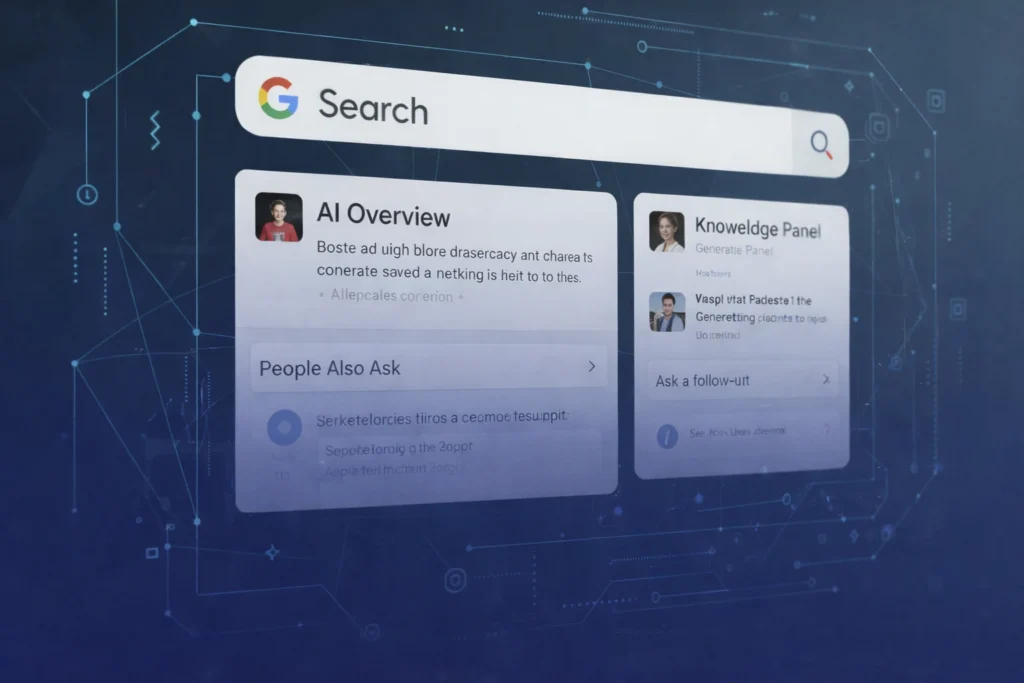
With Search Generative Experience (SGE), AI-powered ranking models, and stronger quality evaluation systems, outdated SEO tactics are becoming ineffective. Brands that still rely on keyword-heavy content or surface-level optimization are seeing declining visibility. This guide explains the Google ranking factors in 2026 in clear terms, focusing on what genuinely improves rankings and what no longer works. Businesses working with a digital marketing agency in Kochi are increasingly focusing on intent satisfaction, content depth, and real user outcomes rather than surface-level SEO tactics.
This blog explains the Google ranking factors that matter in 2026 using simple language and practical tips you can use right away.
1. Content Experience (CX) Becomes the #1 Ranking Factor
In 2026, Google focuses less on how much content you publish and more on the quality of the experience your content offers.
This includes:
- Does the content fully solve the user’s query?
- Is it structured in a way that’s easy to read, skim, and understand?
- Does it demonstrate firsthand expertise?
- Does it satisfy post-click expectations?
Google Ranking Factors in 2026 increasingly reflect whether users feel fully satisfied after reading a page or need to continue searching. Content that is generic, repetitive, or incomplete fails this satisfaction test and performs poorly, regardless of technical or on-page optimization.
Why it matters:
SGE favors complete answers. If your content is incomplete, outdated, or too generic, Google’s AI will not see it as a top result.
Checklist:
✔ Provide complete, actionable answers
✔ Use real examples, data, screenshots, or insights
✔ Add FAQs, comparison tables, and summaries
✔ Remove fluff and repetition
2. Search Intent Alignment (Still King, Even in SGE)
Google Ranking Factors in 2026 reflect a shift where search intent goes far beyond broad labels like “commercial” or “informational.” Modern search systems interpret intent at a granular level—evaluating context, problem depth, decision stage, and expected outcome. Pages that treat intent as a simple category often miss the real need behind the query, leading to partial answers and low satisfaction. Content that aligns with how users think, decide, and act at that exact moment performs better than content built only around keyword type or funnel labels.
In 2026, Google measures intent satisfaction depth:
- Did the page solve the user’s problem in one visit?
- Did the user return to Google for the same query?
- Did they interact with your page, or did they bounce immediately?
Tip:
If your page targets a keyword but the content doesn’t match what top-ranking pages offer, Google will automatically lower your ranking, no matter how strong your SEO may be. If content targets a keyword without satisfying real user intent, Google reduces visibility regardless of other optimizations.
3. E-E-A-T Is Now Measured More Strictly
Expertise, Experience, Authoritativeness, and Trustworthiness continue to gain weight in ranking models.
Google now checks for:
- Clear author identity
- Professional background
- Real-world experience in the topic
- Transparent sources, citations, and data
- Brand reputation signals across the web
2026 update: Google’s algorithms now use AI to check author and entity profiles. Brands with a consistent online presence are more likely to appear in SGE results.
Websites with anonymous content, vague claims, or unverified expertise struggle to appear in SGE and competitive results. Building verifiable authority is one reason many businesses rely on the best SEO company in Kerala to structure content credibility correctly.
4. Page Experience & Core Web Vitals
Google Ranking Factors in 2026 show that technical SEO remains essential, but usability now outweighs speed alone. While fast load times still matter, search systems increasingly evaluate whether pages are easy to navigate, readable without friction, and functional across devices. Poor layout stability, intrusive elements, confusing structure, or interaction delays can undermine otherwise strong technical performance. Pages that combine solid technical foundations with clear, low-friction user experience are more likely to satisfy users and sustain visibility than pages optimised narrowly for speed metrics.
Google evaluates:
CWV 2.0 Metrics
- INP (Interaction to Next Paint) – user interactivity
- LCP (Largest Contentful Paint) – loading experience
- CLS (Cumulative Layout Shift) – visual stability
Performance Factors That Matter More in 2026 Under Google Ranking Factors
- Mobile-first usability
- Smooth scrolling & clean UI
- Distraction-free reading
- Fewer intrusive pop-ups
- Accessibility readiness
Remember:
A fast website helps you compete, but a smooth and reliable experience enables you to keep your ranking.
5. Backlinks Still Matter, but the Rules Have Changed
Google Ranking Factors in 2026 indicate that backlinks are judged less by sheer volume and more by trustworthiness, contextual alignment, and relevance to real users. Links that exist within meaningful content, from sources with clear topical authority and audience overlap, carry more weight than large numbers of disconnected references. Manipulative, low-context, or mass-produced links contribute little because they do not signal genuine endorsement or usefulness. What matters is whether a link reinforces credibility and helps users discover reliable information, not how many links a page accumulates.
Google now ignores:
- Sidebar/blogroll links
- Forum spam
- Non-topical mentions
- Links from non-indexed or low-trust domains
What works in 2026:
High-Value Backlink Signals
- Mentions in niche-relevant publications
- Case studies, testimonials, interviews
- Entity-based anchor text (brand + authority terms)
- Editorially earned links rather than exchanges.
Google’s AI now understands the reason a site links to you.
The reason behind a link is just as important as the site’s authority.
6. Topical Authority Beats Domain Authority
In 2026, Google Ranking Factors in 2026 increasingly favoured websites that demonstrated clear topical specialisation over those covering many unrelated subjects. Sites with focused content depth, consistent expertise, and strong internal coherence performed better because they signalled reliability and relevance to specific user needs. Broad, unfocused coverage often diluted authority and reduced trust, even when individual pages were optimised.
If your website produces consistent, in-depth content around one subject area, Google sees you as an authority, even if your domain is new.
Build topical authority by:
- Creating content clusters around one core subject
- Interlinking related pages
- Publishing expert-led content with depth
- Updating older blogs frequently
SGE prioritizes content from sources with strong topical coherence.
7. Entity SEO Becomes Essential
Google Ranking Factors in 2026 show that Google now pays closer attention to entities—such as people, brands, locations, and well-defined concepts—rather than relying only on keyword matching. This shift changes how content is evaluated and ranked in several concrete ways:
- Your brand must have a clear identity across the internet.
- Your authors must have digital profiles.
- Your services must be consistently described.
- Google should understand who you are and what you do.
Entity optimization improves:
✔ Visibility in SGE
✔ Knowledge panels
✔ Local SEO
✔ Brand trust signals
8. AEO (Answer Engine Optimization) Is Mandatory for SGE
To appear in AI-generated answers, content must deliver a complete, self-contained response that resolves the user’s need without follow-up searches. It should be clearly structured, unambiguous, and consistent so meaning can be extracted reliably. Depth, precision, and real usefulness matter more than volume, repetition, or optimisation tricks.
- Provide direct, concise solutions.
- Use natural language and question-based headings.
- Include structured data (FAQ, HowTo, Product, Organization schema)
- Answer follow-up questions within the same page.
SGE ranks pages that are:
- Useful
- Well-structured
- Supported by credible sources
- Easy for AI to interpret
9. Freshness & Content Updates Get Higher Weight
Google now checks:
- Last updated timestamp
- Quality of updates
- Relevance to new trends
- User feedback and click patterns
Just changing the date on your content is not enough.
Google’s AI compares historical versions of content to detect real improvements.
10. User Engagement Signals (Post-SGE Behavior)
Google monitors how users interact with your site after clicking a result.
Ranking improves when:
- Users stay longer
- They scroll and engage.
- They visit multiple pages.
- They save or share the content.
Ranking drops when:
- They bounce quickly
- They return to Google for the same query.
- They choose a competitor’s result.
This process is how Google checks user satisfaction in 2026.
Conclusion
SEO in 2026 is no longer about “gaming” Google.
It’s about understanding how Google thinks, how users behave, and how AI interprets content.
If your website:
✔ Helps users quickly
✔ Delivers trustworthy content
✔ Shows topical expertise
✔ Loads fast and works smoothly
✔ Earns relevant mentions
You will win both in traditional search and SGE.
The core truth:
Great content + Great experience + Clear expertise = High rankings in 2026.
FAQs
1. What is the most important Google ranking factor in 2026?
Content Experience (CX), which measures how completely and effectively your content solves user intent.
2. Do backlinks matter in 2026?
Yes—but only contextually relevant, trustworthy backlinks from authoritative sources. Quantity no longer helps.
3. How does SGE affect SEO?
SGE prioritizes pages that answer questions directly, show expertise, and are easy for AI to interpret.
4. Is technical SEO still important?
Yes. Core Web Vitals, mobile usability, and clean site structure remain foundational ranking requirements.
5. What should businesses focus on to rank higher in 2026?
Topical authority, E-E-A-T, structured content, answer optimization, and user experience.